The Acts 2:42 Rubric: Three Pathways of Discipleship
by: Mike Fourman
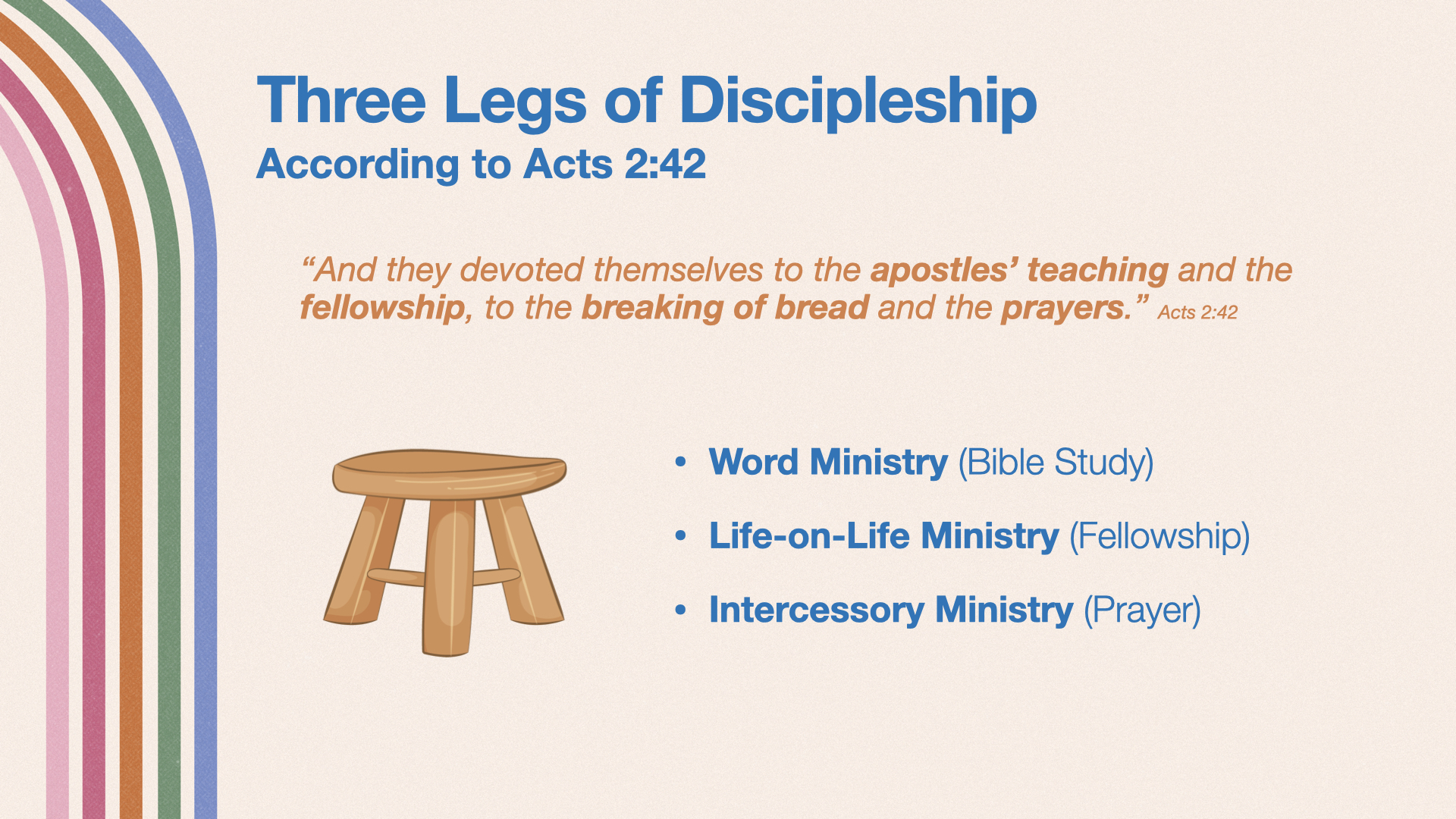
“And they devoted themselves to the apostles’ teaching and the fellowship, to the breaking of bread and the prayers.” (Acts 2:42, ESV)
When we talk about discipleship, a helpful question to ask is this: What are the pathways—or the inputs—of discipleship? In other words, how does the church actually cultivate disciples of Jesus?
Before answering that question, we must begin with a more basic one.
What Is a Disciple?
Simply put, a disciple is a follower. A Christian disciple, therefore, is a follower of Jesus.
The book of Acts gives us an important historical note about this identity. In Acts 11:26 we read that, “…the disciples were first called Christians in Antioch.” The name Christian is a wonderful name. It means someone who is associated by faith and lifestyle with Jesus.
C.S. Lewis captured this idea well when he wrote in Mere Christianity:
“The Church exists for nothing else but to draw men into Christ, to make them little Christs.”
Scripture makes clear that being a Christian is more than merely using a title. It is about resemblance. As Romans 8:29 reminds us, those who belong to Christ are being conformed to His image. And as 1 John 2:6 teaches, “Whoever says he abides in him ought to walk in the same way in which he walked.”
So we might expand our definition this way: A Christian disciple is a follower of Jesus who, through followship, increasingly resembles Jesus.
What Is the Motivation of Discipleship?
Discipleship is more than a good religious practice. It is something real and thorough, and it is motivated by gratitude and love.
One Pastor summarized it this way: “The fundamental response to God’s radical love for us is for us to radically love Him.”
Therefore discipleship is more than greater participation within a church context. It is first a God-ward focused heart, and that heart then begins to shape and describe the whole of life. It begins with an inward building up before it has any outward manifestation.
Mark Dever, in his little book on discipleship from the excellent 9Marks series, puts it this way: “Christians (disciples) are people who have real faith in Christ, and who show it by resting their hopes, fears, and lives entirely upon him.”
What Is Discipleship?
Two truths help clarify the concept.
First, one must be a disciple before they disciple. This does not mean someone must arrive at some finished marker of maturity before encouraging others. But it does mean a person must be serious about the journey of following Christ.
Second—and this is central—disciples disciple.
If I love God, that love for God will express itself in my love for my neighbor and my brother. God’s love starts a chain reaction. If my love for God is not spilling over into an intentional and deep love for my brothers and sisters, then the claim to love God becomes hollow.
This is precisely the argument John makes in 1 John 4:19-21: “We love because he first loved us. If anyone says, ‘I love God,’ and hates his brother, he is a liar; …whoever loves God must also love his brother.”
Jesus Himself said in John 13:35: “By this all people will know that you are my disciples, if you have love for one another.” (John 13:35)
From this we conclude two things:
- We are all called to be disciples.
- We are all called to encourage others to be disciples of Jesus.
But that leads to the practical question: How do we do that?
The Pattern of Discipleship in Acts 2:42
Acts 2:42 gives us a beautiful description of the early church’s life together. The setting is just after Christ’s ascension. In Jerusalem, during the event we know as Pentecost, the Spirit of God descends with power. The gospel is proclaimed, thousands believe, and the church is formed. Immediately afterward, Luke describes the rhythms of the new community.
“And they devoted themselves to the apostles’ teaching and the fellowship, to the breaking of bread and the prayers.” (Acts 2:42)
Four activities are listed, but they can really be summarized as three pathways of discipleship. The entire congregation, led by the elders, devoted themselves to these practices:
- Word Ministry (Bible Study)
- Life-on-Life Ministry (Fellowship)
- Intercessory Ministry (Prayer)
You might picture it like a three-legged stool. Each leg supports the others. Remove one, and the structure becomes unstable.
Word Ministry — The Study and Sharing of Scripture
The first pathway is devotion to the apostles’ teaching. The church grows as believers gather around the Word of God. Paul expresses this principle clearly in Colossians 3:16:
“Let the word of Christ dwell in you richly, teaching and admonishing one another in all wisdom.”
Disciples encourage other disciples through the regular study, sharing, and application of Scripture.
Life-on-Life Ministry — Fellowship
The second pathway is fellowship, translated from the Greek word koinōnia. The word carries the idea of partnership. Paul uses the same word when writing to the Philippian church:
“I thank my God in all my remembrance of you, always in every prayer of mine for you all making my prayer with joy, because of your partnership in the gospel from the first day until now.” (Philippians 1:3-5)
Fellowship is not merely social interaction. It is shared life in the mission of the gospel.
Intercessory Ministry — Prayer
The third pathway is prayer. The early church was a praying church. They interceded for one another, seeking spiritual maturity and faithfulness. We see this example in Epaphras. Paul writes:
“Epaphras, who is one of you, a servant of Christ Jesus, greets you, always struggling on your behalf in his prayers, that you may stand mature and fully assured in all the will of God.” (Colossians 4:12)
This is intercessory ministry—believers laboring in prayer for the spiritual growth of others.
What Does This Mean for Us?
The Elders at Community Baptist recently met for two days to think carefully about what these principles mean for our ministry. We asked a simple but important question:
How are we doing in these areas as a church?
We are committed to aligning our ministry with these three objectives:
- Word Ministry
- Life-on-Life Ministry
- Intercessory Ministry
Our calendar activities should reflect these priorities. Our small group Bible studies should further these priorities.
We recognize we must be intentional. Discipleship does not happen by accident. It grows where believers intentionally devote themselves to the Word, to fellowship, and to prayer—encouraging one another to follow Jesus more closely and to resemble Him more clearly.
*article derived from teaching notes on “The Pathways of Discipleship” (Acts 2:42), presented June 1, Members Meeting, Community Baptist Church, M.Fourman